
What vega measures
Vega is the change in an option's theoretical premium for a one-percentage-point change in implied volatility, holding everything else equal. A vega of 8 means the premium would move by about 8 rupees if IV rose by one point. Vega is positive for bought options, so both calls and puts gain when IV rises and lose when it falls.
Vega does not forecast IV. A high vega only says the premium is highly sensitive to volatility; it says nothing about which way volatility will go.
Where vega is concentrated
| Factor | Effect on vega | Why |
|---|---|---|
| Moneyness | Highest at the money, fading in the wings | Volatility matters most when the outcome is uncertain |
| Time to expiry | Higher for longer-dated options | More time for a volatility change to matter |
| Close to expiry | Falls toward zero | Little time is left for volatility to change the outcome |
This is why monthly options carry more vega than weekly options at the same strike, and why the at-the-money strike dominates a vega chart.
Call vega vs put vega
Under the standard model, a call and a put at the same strike and expiry with the same IV have the same vega. In live markets they differ because the two sides trade at different IVs, which is skew. Put vega above call vega usually reflects stronger demand for downside protection; call vega above put vega points to more demand on the upside. Treat the gap as a description of positioning in the options market, not as a price forecast.
Reading the vega analysis chart
The Vega Analysis tool plots average call vega and put vega across a window of strikes around the at-the-money strike, with the index price behind them. You can switch between the vega level and its percentage change, compare the current reading with its historical percentile, and replay any past session.
- Centre the window on the at-the-money strike and keep the strike count the same when comparing days.
- Compare call and put vega to see whether sensitivity is balanced or leaning to one side.
- Use the percentile to judge whether today's vega is ordinary or unusual for that instrument.
- Replay an earlier event day to see how vega behaved around it.
Vega around events and expiry
Before known events, IV tends to rise and vega-sensitive premiums swell; after the event IV often drops and the same premiums deflate. Because vega itself shrinks as expiry nears, a volatility change matters less to a weekly option on expiry day than to a monthly option with weeks left.
How to use the Vega Analysis
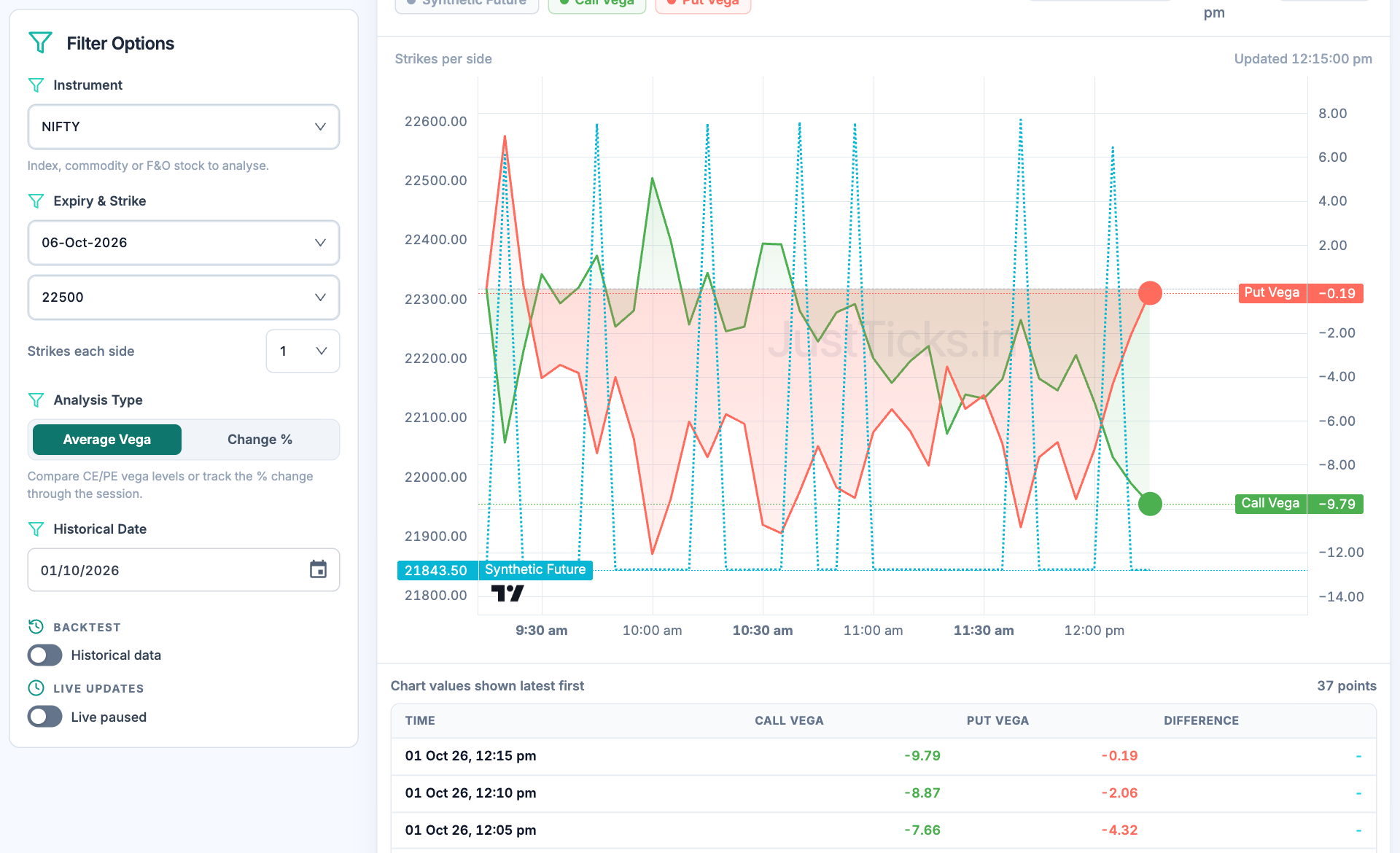
- Contract scope. Select expiry and strike consistently; vega varies with time and moneyness.
- Analysis type. Distinguish average vega from percentage change and verify the chart legend.
- Sensitivity and change. A negative displayed change does not mean a bought option has negative vega.
- Observation table. Check the timestamp and precision in the table when a chart label is rounded.
- Choose an underlying, expiry, center strike and strike window. Start near ATM and note the observation date.
- Choose Average Vega for the level or Change % to inspect movement; confirm the legend and table units.
- Compare CE and PE using the same timestamp. A displayed decline in vega is different from a negative position vega.
- Use the IV chart to measure the volatility input, then use Strategy Builder to combine vega across long and short legs.
Limits and common misreads
- Vega is local. It describes a small IV change; a large move changes vega itself.
- Percentage changes can be unstable when the previous vega was very small.
- Premium moves have several causes. Spot, time and IV all act together, so vega alone never explains a candle.
- Thin strikes. Vega for a strike that has not traded rests on a stale IV.
This guide is educational and is not investment advice.